
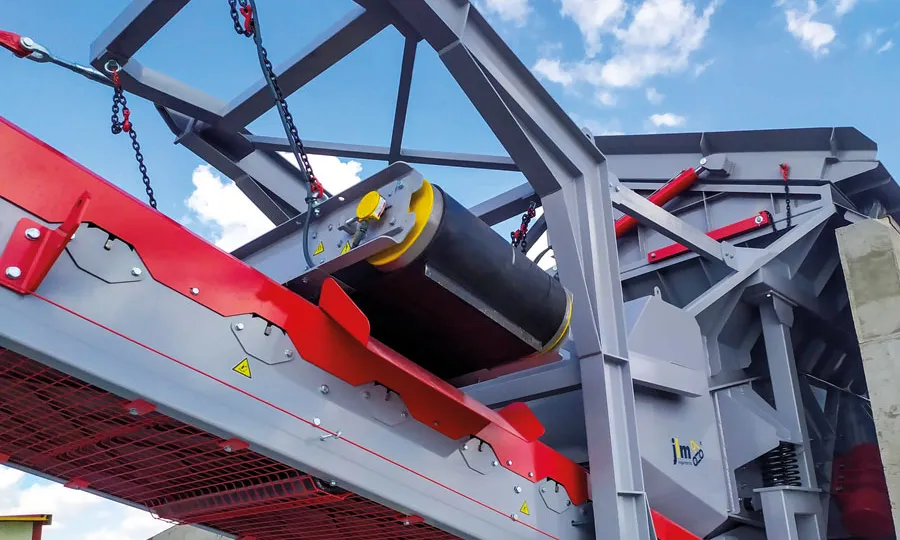
Modern recycling facilities face increasing pressure to improve recovery rates, reduce contamination and maximise the value of recovered materials.
As recycling processes become more advanced, efficient material separation has become one of the most important factors in plant performance. Among the technologies used to improve material recovery, overband magnets play a critical role by removing ferrous metals from waste streams before they reach downstream equipment.
In this article, we explore how overband magnets work, their applications in recycling facilities and the benefits they bring to modern waste recovery operations.
What Is an Overband Magnet?
An overband magnet is a magnetic separation system installed above conveyor belts to automatically extract ferrous metals from a moving material stream.
As waste materials pass beneath the magnetic field, ferrous metals are attracted to the magnet and separated from the rest of the material. The recovered metals are then discharged into a separate collection area for further processing or recycling.
This process operates continuously, making overband magnets highly effective for facilities handling large volumes of material.
Today, Overband Magnets are widely used in recycling plants, construction and demolition waste facilities, aggregate operations and industrial processing plants.
Why Metal Separation Matters in Recycling Facilities
Effective metal separation offers benefits that extend beyond the recovery of valuable materials.
Removing ferrous metals at an early stage helps improve the efficiency of the entire recycling process.
Without proper separation, metallic contaminants can:
- Reduce the quality of recovered materials.
- Increase wear on processing equipment.
- Cause damage to crushers and screening systems.
- Reduce overall plant efficiency.
- Increase maintenance costs.
For this reason, magnetic separation has become a standard component in modern Recycling Equipment installations.
How Overband Magnets Work
The operating principle is relatively simple but highly effective.
Material is transported along a conveyor belt and passes beneath the magnetic separator.
The magnetic field attracts ferrous materials such as:
- Steel.
- Iron.
- Metal fragments.
- Reinforcing bars.
- Scrap metal components.
These materials are lifted from the waste stream and discharged separately while the remaining material continues through the recycling process.
This automated process allows facilities to recover valuable metals while maintaining continuous production.
Applications in Recycling Plants
Overband magnets can be integrated into a wide variety of recycling operations.
Construction and Demolition Waste Recycling
One of the most common applications is the treatment of construction and demolition waste.
Materials such as concrete, bricks and mixed debris often contain metallic elements that must be removed before further processing.
When integrated into systems such as REC100, magnetic separation significantly improves the quality of recovered aggregates.
Material Recovery Facilities
Municipal and industrial waste processing plants also use magnetic separation systems to recover ferrous metals before sorting and classification stages.
This improves material purity and increases recycling rates.
Scrap and Metal Recovery Operations
Overband magnets are commonly installed in facilities where metal recovery represents a significant source of revenue.
By automating the separation process, operators can recover valuable materials with minimal manual intervention.
Protecting Downstream Equipment
One of the most important advantages of overband magnets is their ability to protect processing equipment.
Ferrous contaminants can cause significant damage when they enter:
- Impact Crushers
- Vibrating Screens
- Conveyor systems
- Shredders
- Sorting equipment
Removing metal before these stages helps extend equipment lifespan and reduce maintenance requirements.
In many cases, the savings generated through reduced wear can justify the investment in magnetic separation equipment.
Improving Material Quality
Recycling facilities must increasingly meet strict quality requirements for recovered materials.
Customers expect clean and consistent recycled products that can be reused in manufacturing and construction applications.
Magnetic separation helps achieve these objectives by reducing contamination levels and improving material purity.
This is particularly important in facilities producing recycled aggregates and secondary raw materials.
Integration with Complete Recycling Systems
The greatest benefits are achieved when magnetic separation equipment is integrated into a complete recycling solution.
In modern facilities, overband magnets often work alongside:
- Sorting Cabins
- REC100
- TR100
- TR200
- Screening systems
- Conveyor belts
Together, these technologies create efficient recovery processes capable of maximising material valorisation and reducing waste sent to landfill.
Sustainability Benefits
The recovery of ferrous metals contributes directly to circular economy objectives.
By recovering metals for reuse, recycling facilities reduce the need for virgin raw materials and decrease the environmental impact associated with extraction and manufacturing.
In addition, cleaner material streams improve the overall efficiency of recycling processes, contributing to more sustainable waste management practices.
For companies operating in the recycling sector, magnetic separation has become an important tool for achieving both environmental and economic objectives.
Choosing the Right Overband Magnet
Selecting the correct system depends on several operational factors.
Important considerations include:
- Material characteristics.
- Conveyor width.
- Material depth.
- Processing capacity.
- Installation location.
- Type of ferrous contamination.
A properly engineered solution ensures maximum recovery rates while maintaining efficient plant operation.
For this reason, many operators choose customised solutions adapted to the specific requirements of their facility.
Conclusion
Overband magnets play a fundamental role in modern recycling facilities by improving material recovery, protecting equipment and increasing the quality of recovered products.
As recycling plants continue to pursue higher recovery rates and greater operational efficiency, magnetic separation systems have become essential components within integrated waste recovery solutions.
For operators seeking to maximise both profitability and sustainability, investing in effective metal separation technology is a strategic decision that delivers long-term value.
Looking to improve metal recovery in your recycling facility?
JLM Ingeniería designs and manufactures Overband Magnets and complete Recycling Equipment solutions for waste recovery plants, construction and demolition waste facilities and industrial recycling applications.