
Aggregate production relies on efficient crushing processes to transform raw materials into usable products for construction, infrastructure and industrial applications. Whether processing limestone, granite, basalt or recycled materials, achieving the correct particle size distribution is essential for product quality and plant efficiency.
Among the different crushing technologies available, impact crushers have become one of the most widely used solutions in aggregate production due to their versatility, high reduction ratios and ability to produce consistently shaped materials.
In this article, we explain how impact crushers work, their role in aggregate processing and the factors that influence their performance.
What Is an Impact Crusher?
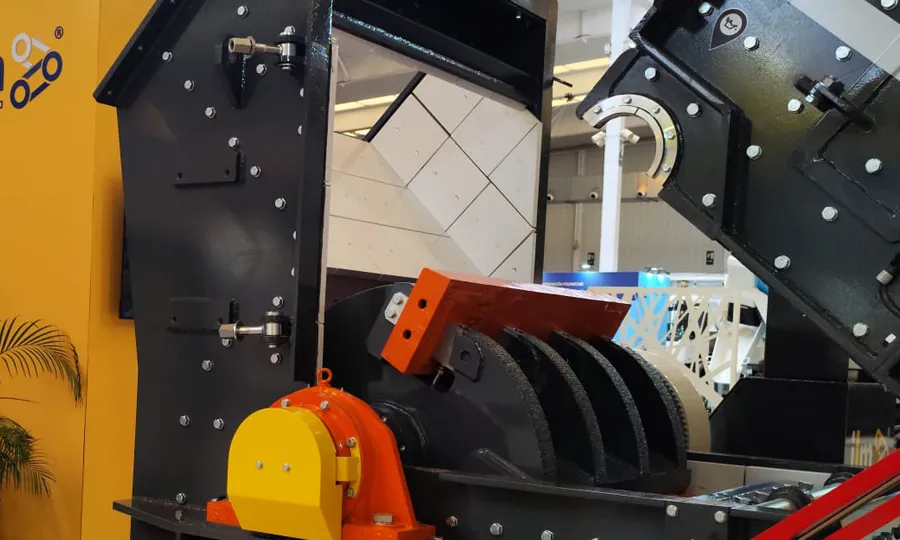
An impact crusher is a machine designed to reduce the size of materials through the kinetic energy generated by a rotating rotor. Unlike compression crushers, which break material by applying pressure, impact crushers fracture material by accelerating it against impact surfaces inside the crushing chamber.
The process begins when the material enters the crusher through the feed opening. Once inside, the rotor equipped with blow bars rotates at high speed and projects the material against adjustable impact plates. The repeated collisions cause the material to fracture until it reaches the desired particle size and exits the machine.
This crushing method allows operators to achieve excellent particle shape while maintaining high production rates.
Why Are Impact Crushers Widely Used in Quarry Operations?
Impact crushers are commonly used throughout the aggregates industry because they combine productivity, flexibility and product quality in a single machine.
Their ability to process different types of material makes them suitable for a wide range of quarry applications, including:
- Limestone processing
- Gravel production
- Basalt crushing
- Manufactured sand production
- Recycling of construction and demolition waste
For many aggregate producers, impact crushers offer the ideal balance between production capacity, operating costs and final product quality.
Main Benefits
- High reduction ratio
- Consistent particle size distribution
- Excellent cubicity of final products
- High production capacity
- Adaptability to different materials
- Reduced downstream processing requirements
Primary, Secondary and Tertiary Crushing Stages
Impact crushers can be integrated into different stages of the aggregate production process depending on the material characteristics and desired final product.
Primary Crushing
Primary impact crushers handle larger feed sizes and perform the initial reduction of raw material extracted from the quarry.
Their objective is to prepare the material for subsequent crushing and screening stages.
Secondary Crushing
Secondary crushers process material that has already undergone initial reduction. This stage focuses on achieving more controlled particle sizes and improving product uniformity.
This is one of the most common applications in aggregate processing plants.
Tertiary Crushing
Tertiary crushing is used when fine and highly controlled output sizes are required.
These crushers are often employed in the production of manufactured sand and high-quality aggregates for demanding applications.
Key Components That Influence Crusher Performance
The efficiency and reliability of an impact crusher depend largely on the quality and condition of its main components.
Rotor
The rotor is the heart of the machine. Its speed, diameter and design directly affect crushing efficiency and throughput.
Blow Bars
Blow bars are responsible for delivering the impact force that fractures the material. Manufactured from wear-resistant alloys, they play a critical role in productivity and maintenance costs.
Impact Plates
Located inside the crushing chamber, impact plates create secondary crushing actions and help control the final product size.
Crusher Housing
The housing protects the machine structure and provides access for maintenance operations while withstanding the forces generated during crushing.
Maintenance Best Practices for Impact Crushers
Like any industrial equipment operating under demanding conditions, impact crushers require regular maintenance to ensure reliable performance and minimise downtime.
Daily Inspections
Operators should routinely inspect:
- Blow bar wear
- Impact plate condition
- Bearing lubrication
- Material build-up
- Unusual vibrations
Early detection of wear or misalignment can prevent costly failures.
Periodic Maintenance
Scheduled inspections should include:
- Rotor condition checks
- Impact plate adjustments
- Bearing inspection and lubrication
- Belt tension verification
- Hydraulic system inspection
These actions help maintain crushing efficiency and extend equipment life.
Long-Term Maintenance
During planned shutdowns, operators should evaluate:
- Complete replacement of wear parts
- Rotor balance verification
- Housing condition
- Transmission system inspection
A proactive maintenance strategy significantly reduces operational risk and improves plant availability.
Applications in Aggregate Production
Impact crushers are widely used throughout the aggregate production industry.
Typical applications include:
Limestone Processing
Producing aggregates for concrete, asphalt and road construction.
Granite and Basalt Crushing
Generating high-quality aggregates for demanding infrastructure projects.
Gravel Processing
Improving material grading and achieving market specifications.
Manufactured Sand Production
Producing controlled fine aggregates with consistent quality.
Choosing the Right Impact Crusher
Selecting the right crusher depends on several factors:
- Type of material to be processed
- Maximum feed size
- Required production capacity
- Desired final product size
- Existing plant layout
- Maintenance requirements
Every aggregate operation has unique requirements, which is why customised engineering solutions often provide the best long-term results.
Working with an experienced manufacturer helps ensure that the selected equipment aligns with production objectives while minimising operating costs.
Conclusion
Impact crushers remain one of the most effective solutions for aggregate production thanks to their ability to combine high productivity, consistent material quality and operational flexibility.
Whether integrated into new facilities or existing production lines, these machines play a crucial role in improving plant performance and helping aggregate producers meet increasingly demanding market requirements.
For quarry operators looking to maximise efficiency, selecting the right crushing equipment is a strategic decision that directly impacts productivity, profitability and long-term operational success.
Looking for the right impact crusher for your operation?
JLM Ingeniería designs and manufactures robust crushing solutions for aggregate production plants, quarries and industrial applications.
Contact our team today to discuss your project and find the most suitable crushing solution for your operation.