
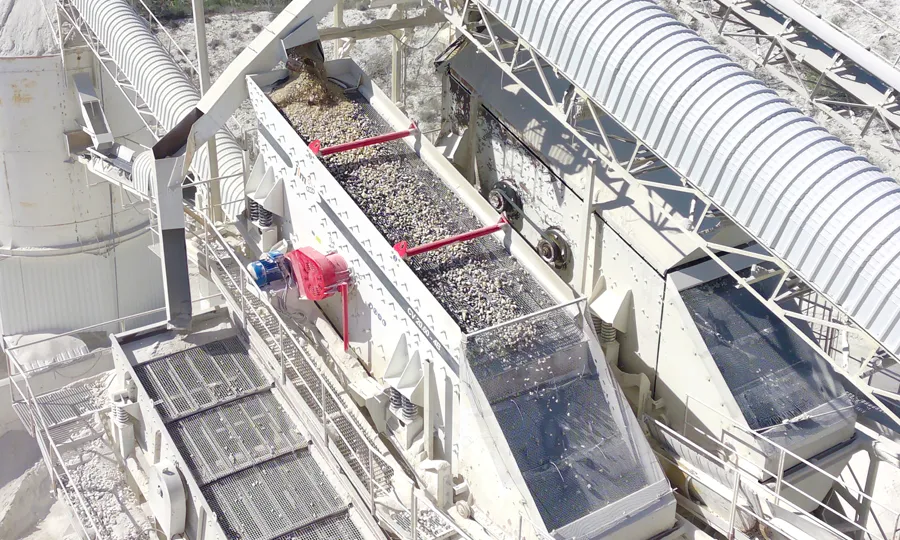
Efficient material classification is one of the most important factors in aggregate production. Regardless of how effective the crushing stage may be, poor screening performance can reduce plant efficiency, increase operational costs and negatively impact final product quality.
For quarry operators, selecting the right vibrating screen is therefore a critical decision. The correct screening equipment ensures accurate material separation, maximises throughput and helps maintain consistent aggregate specifications across different production requirements.
In this article, we explain the key factors to consider when choosing a vibrating screen for quarry operations and how the right solution can improve overall plant performance.
Why Screening Is Critical in Aggregate Production
Screening is the process of separating materials into different size fractions after crushing.
The purpose of this operation is to ensure that aggregates meet customer specifications and can be efficiently processed in subsequent stages.
A well-designed screening system contributes to:
- Higher plant productivity
- Improved aggregate quality
- Reduced recirculation of material
- Better crusher efficiency
- Lower operational costs
In modern aggregate plants, screening is often performed after each crushing stage to ensure that only material meeting the required specifications progresses through the production process.
What Is a Vibrating Screen?
A vibrating screen is a machine designed to separate materials according to particle size using vibration and screening surfaces.
As material moves across the screen deck, smaller particles pass through the apertures while larger particles continue along the screening surface until they reach the discharge point.
This process allows operators to obtain multiple aggregate fractions from a single material flow.
Depending on production requirements, vibrating screens can be configured with different numbers of decks, screen sizes and vibration characteristics.
Key Factors When Selecting a Vibrating Screen
Choosing the right vibrating screen requires a detailed understanding of both the material being processed and the production objectives of the plant.
Material Characteristics
The properties of the material have a direct impact on screen performance.
Important considerations include:
- Material size distribution
- Moisture content
- Abrasiveness
- Density
- Clay or fine material content
Highly abrasive materials, for example, require reinforced structures and wear-resistant components.
Required Production Capacity
The screen must be capable of handling the desired throughput without compromising classification accuracy.
Oversized equipment may increase investment costs unnecessarily, while undersized screens can become bottlenecks within the production process.
The correct balance between capacity and efficiency is essential.
Number of Required Fractions
Some plants only require two or three final products, while others need multiple aggregate grades.
The number of decks and screening surfaces should be selected according to the required final product specifications.
Multi-deck screens offer greater flexibility when producing several aggregate sizes simultaneously.
Integration Within the Crushing Circuit
The position of the screen within the plant has a significant influence on its design requirements.
Vibrating screens can be integrated into:
- Primary crushing circuits
- Secondary crushing stages
- Closed-circuit systems
- Final classification processes
Each application presents different challenges and performance requirements.
Screening After Primary Crushing
One of the most common applications for vibrating screens is the classification of material immediately after primary crushing.
At this stage, the screen separates material according to size and removes oversized fractions that require additional crushing.
This process improves efficiency by ensuring that downstream equipment only processes material within the desired size range.
Closed-Circuit Screening Systems
In many aggregate plants, vibrating screens operate as part of a closed-circuit crushing process.
Material that does not meet the required specifications is automatically recirculated back to the crusher for further reduction.
This configuration offers several advantages:
- Improved product consistency
- Increased plant efficiency
- Better resource utilisation
- Reduced waste generation
Closed-circuit systems are particularly valuable when producing aggregates with strict grading requirements.
How Vibrating Screens Improve Product Quality
Aggregate quality depends heavily on accurate particle size classification.
High-performance vibrating screens help producers achieve:
Consistent Aggregate Grading
Accurate screening ensures that each product fraction remains within specification.
Reduced Contamination
Efficient separation minimises the presence of oversized or undersized material.
Better Process Control
Operators gain greater control over the entire production process.
Higher Customer Satisfaction
Consistent product quality improves reliability and reduces the risk of rejected loads.
Maintenance Considerations
Like any equipment operating in demanding quarry environments, vibrating screens require regular inspection and maintenance.
Key maintenance tasks include:
- Inspection of screening media
- Verification of vibration mechanisms
- Checking structural integrity
- Monitoring bearings and lubrication systems
- Tightening bolts and fastening components
A proactive maintenance programme helps maximise equipment lifespan while reducing unexpected downtime.
Choosing the Right Partner for Your Screening Project
Selecting the correct vibrating screen involves more than simply choosing a machine from a catalogue.
Each quarry has unique requirements based on:
- Material characteristics
- Production targets
- Plant layout
- Available space
- Future expansion plans
Working with an experienced engineering partner ensures that screening equipment is properly integrated into the overall production process.
Custom-designed solutions often deliver higher efficiency and lower operating costs than standard configurations.
Conclusion
Vibrating screens play a fundamental role in quarry operations by ensuring accurate material classification and supporting efficient aggregate production.
By selecting equipment that matches the specific requirements of the operation, producers can improve product quality, increase throughput and optimise plant performance.
For aggregate producers seeking long-term efficiency and reliability, investing in the right screening solution is a key step towards achieving sustainable operational success.
Looking for the right vibrating screen for your quarry?
JLM Ingeniería designs and manufactures custom vibrating screens for aggregate processing plants, helping operators improve classification accuracy, increase productivity and reduce operational costs.